
Why We Dance Year-Round, Not Just Navratri
Bay Area garba packs 50+ events into a few autumn weeks, then goes quiet. Here's why we think the circle deserves more than a season, and how it happens.
What happens to garba after Navratri?
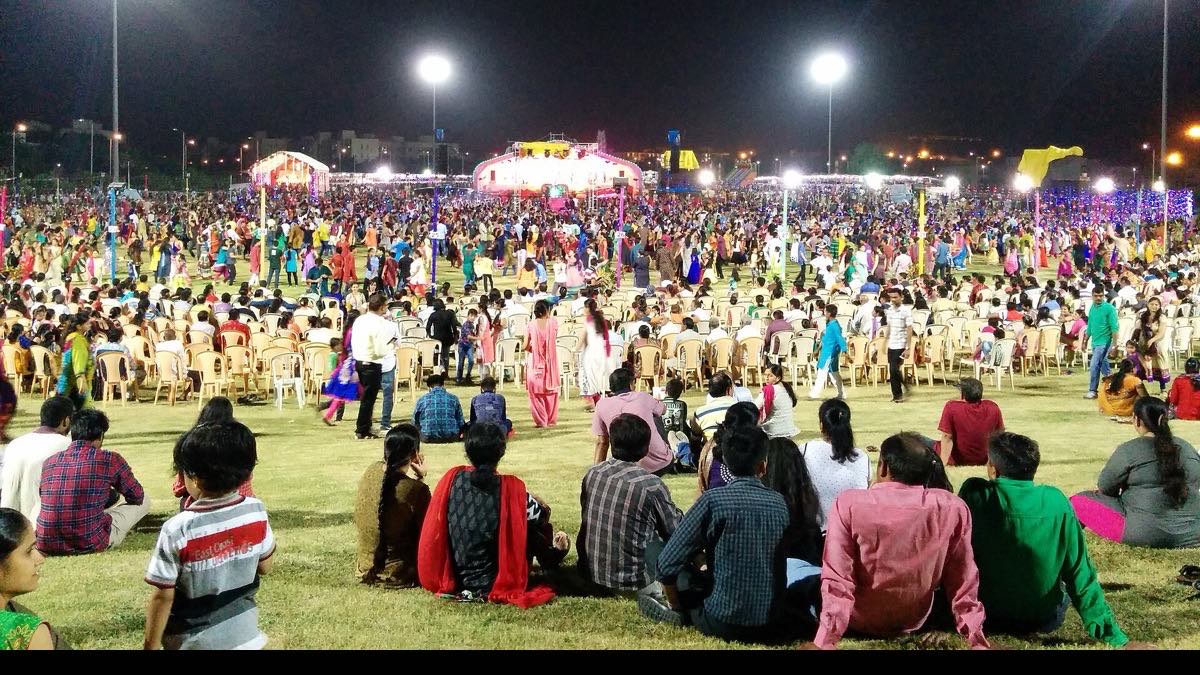
Silence, mostly. The Bay Area hosts 50+ garba nights a season, a genuinely big scene, but nearly all of it compressed into a window of about four to six weeks around the festival. Arena nights with touring artists, community series in school gyms, workshops in the run-up. Then the season ends, the sticks go back in the closet, and the dance disappears for the better part of a year.
If garba is just an event to you, that’s fine; the events are wonderful. But if the dance ever felt like more than a night out, if you’ve stood in a circle at 11pm with your heart pounding and thought “why don’t I get to feel this in February,” then the eleven quiet months are the whole problem.
Why does dancing year-round matter?
Three reasons, in rising order of importance.
You can’t learn garba in one night. A mega event with three thousand people teaches you nothing; you leave with sore feet and the same steps you arrived with. Skill needs repetition, and repetition needs a standing class. That’s the difference between attending garba and being able to dance it. (Start with what garba is if you’re new to the dance itself.)
A practice keeps the culture alive; an event only visits it. The Bay Area is home to roughly 436,000 Asian Indian residents, and only a small fraction grew up with garba as their regional tradition; Gujarati speakers are about 6.6% of the local Indic-speaking community. A once-a-year event can’t hand a dance to people who didn’t inherit it. A weekly circle can, one step at a time, to anyone who walks in.
The circle is the point. People come to learn the dance; they stay because of who’s in the room. A weekly class produces the thing a yearly event never can: people who know your name, notice when you’re missing, and text you when the music’s good. And yes, garba happens to be a serious workout (here’s the honest breakdown), but nobody stays for the calories. They stay for the circle.
Garba Groove was started by Fenil, a Gujarati who has danced garba for over ten years and didn’t want the music to stop when the season did.
Does Garba Groove run classes twelve months a year?
Not yet, and we won’t pretend otherwise. Right now, classes run in sessions that build toward Navratri, with the busiest stretch from summer through the festival in October. Year-round is the ambition, and it’s one the community unlocks rather than one we announce.
Here’s the honest mechanics: keeping a class alive in the quiet months takes enough dancers who want it. So instead of promising a schedule we can’t guarantee, we run a waitlist. It’s not a marketing list; it’s a vote count.
How does the waitlist work?
Simply. Between sessions, the booking page becomes a waitlist: you tell us who you are and where you are, and every signup is a vote for garba near you. When enough votes stack up in an area, the next session opens and the waitlist hears first.
That’s the deal, stated plainly: we bring the instruction, the music, and the circle; the community brings the demand that keeps it running. Enough of us want it, and the classes keep coming. It has the nice side effect of being self-fulfilling, because the fastest way to get year-round garba is to be someone who shows up for it.
What does year-round practice do for your Navratri?
It turns the festival from a spectator night into a payoff. Navratri 2026 runs October 11–20, and there is a version of you that arrives already fluent: steps automatic, stamina built, at home in the fastest circle instead of watching it from the snack table. That version is built in the months before, not on the night.
If that’s the Navratri you want, the path is short: see how classes work, read the Navratri 2026 guide for the season’s timeline, and book your first class or join the waitlist, whichever the calendar offers when you arrive. Either way, you’re casting a vote for a Bay Area where the music doesn’t stop in October.
Frequently asked questions
Are garba classes only during Navratri season?
Classes run in sessions that build toward Navratri, with the busiest window from summer through the festival. What runs after the season is decided by the waitlist: enough demand unlocks the next session.
What is the Garba Groove waitlist?
It's how the community votes for more garba. Between sessions, the booking page collects waitlist signups, and when enough people in an area want classes, a new session opens. Every signup genuinely counts.
Why not just go to Navratri events instead of classes?
Go to both. A big garba night is joyful but passive: you're one face in thousands and you leave with no new skill. A weekly class is where you actually learn the dance and meet people whose names you'll know by week three.
Do I have to be Gujarati to join?
No. Garba Groove is open to everyone: second-generation Indians, Hindi and Telugu and Tamil speakers, and non-Indians who love to move. The dance is Gujarati; the circle is for anyone.
What can I do to keep dancing between sessions?
Keep the steps warm at home (the basic patterns need about six feet of floor), catch community events when they surface, and stay on the waitlist. The waitlist is the count that opens the next session, so being on it is the most useful off-season move there is.
Keep reading
What Is Garba? A Beginner's Guide
Garba is Gujarat's circle dance of Navratri, now danced worldwide. What it is, where it comes from, and how a total beginner can join a circle.
Read →Is Garba a Good Workout?
Yes: garba burns roughly 330 to 500 calories an hour and counts toward the CDC's 150 weekly minutes. The workout is real; the circle is why people stay.
Read →Navratri 2026 in the Bay Area: Dates & Where to Play Garba
Navratri 2026 runs Oct 11–20. How the Bay Area garba season works, when the lineup drops, and how to get dance-floor ready before the first night.
Read →