
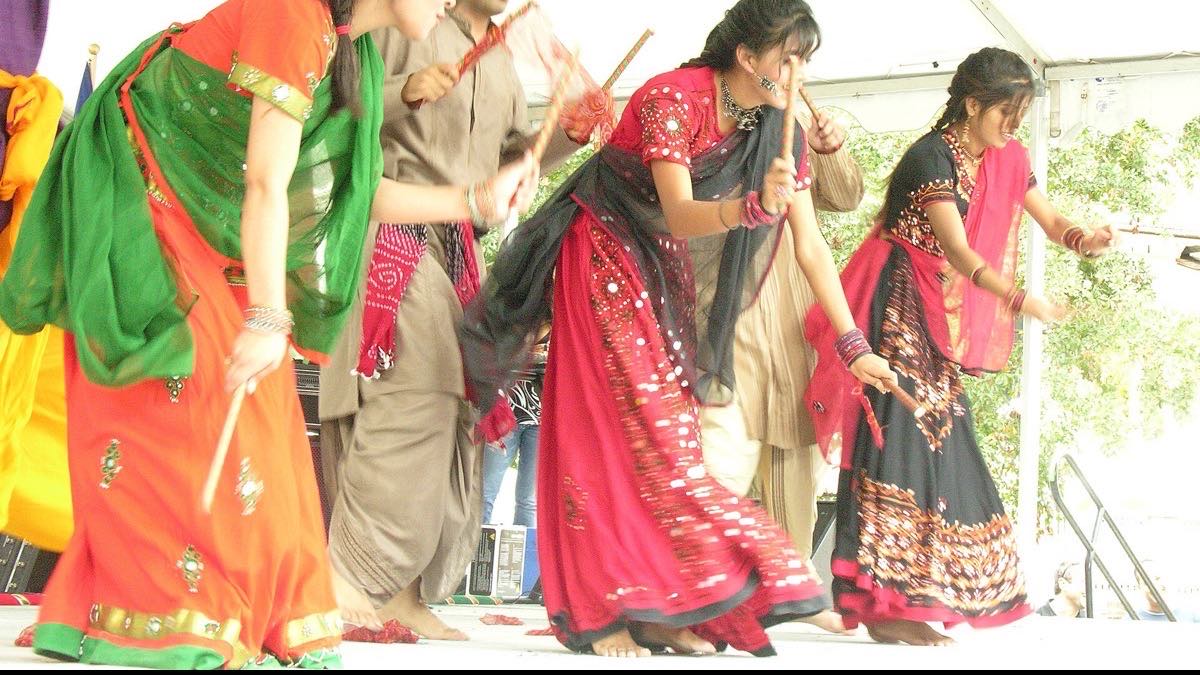
Is Garba a Good Workout?
Yes: garba burns roughly 330 to 500 calories an hour and counts toward the CDC's 150 weekly minutes. The workout is real; the circle is why people stay.
The workout is real, in other words. It is also, honestly, not why people stay. Let’s take both halves of that seriously, because both are true.
What kind of workout is garba, exactly?
Garba is rhythmic aerobic dance, and its structure does something most workouts have to engineer on purpose. Traditional garba music starts slow and accelerates, song after song, so a garba session naturally builds from a gentle warm-up to a heart-pounding peak. That built-in acceleration is why dancers at a Navratri night can look like they are running intervals by the final songs: because they effectively are.
The movement itself is full-body:
- Legs and glutes carry the constant stepping, traveling, and bounce of the basic patterns.
- Core and balance work through every spin and direction change; garba’s turns are essentially loaded balance training on the beat.
- Arms and shoulders never stop, because the claps and sweeping arm lines are the percussion of the dance.
Public-health guidance treats dancing of this kind as legitimate exercise, not a soft substitute. The CDC’s Physical Activity Guidelines count dance as moderate-to-vigorous aerobic activity and recommend adults get at least 150 minutes of it per week. Two garba sessions cover most of that, and unlike a treadmill, nobody has ever needed a podcast to survive one.
How many calories does garba burn?
Nobody has strapped a metabolic lab to a garba circle, so the honest way to answer is by comparison. Harvard Medical School’s calorie tables estimate aerobic dance at roughly 165 to 244 calories per 30 minutes depending on body weight, which puts a full hour of garba in the neighborhood of 330 to 500 calories, on par with a brisk cardio class or a steady jog. Two things nudge garba toward the top of its range: the music accelerates within every song, so the final stretch of a session plays like intervals, and the spins and arm lines keep the whole body recruited instead of just your legs.
Why does garba not feel like exercise?
Because your attention is somewhere better. The steps repeat in a loop (see the basic garba steps if you are curious how the loop works), the music tells you exactly when to move, and the circle around you carries the effort socially. Exercise scientists talk about dissociation, the way external focus lowers perceived exertion; a garba circle is a dissociation machine. You notice you are drenched at the end, not during.
This is also what makes garba unusually sticky compared with the gym membership that quietly lapses every February. You are not gutting out reps alone. You are inside a moving circle of people, all dancing the same step, and leaving early feels like leaving a party, not skipping a workout.
Can you learn a dance and get a workout at the same time?
At Garba Groove, classes fuse garba with a HIIT-style workout format: the interval structure of high-intensity training mapped onto real garba instruction. The accelerating song does what a HIIT timer does, pushing effort up in waves with recovery built in, while you are genuinely learning the dance, from be taali through spins and into dandiya raas. You leave with a workout done and a skill kept.
Classes are beginner-paced and open to everyone: Gujarati or not, Indian or not, dancer or absolute beginner. If a sweaty, joyful hour sounds better than another spin class, see how classes work, or just book your first class and feel it for yourself.
So is fitness the reason to start garba?
Here is the honest answer: fitness is a great reason to start and a weak reason to stay. Nobody stands in a circle of friends at 10 p.m., breathless and grinning after the last song, thinking about their step count.
What keeps people in the circle is the circle. Garba is danced facing inward, everyone included, no one dancing alone; that is the whole meaning of the dance, and it does something a solo workout structurally cannot. The people you sweat next to every week stop being strangers remarkably fast. New arrivals to the Bay Area find a standing room full of people glad they showed up. Second-generation dancers find their culture on their own terms. The calories are real, and they are a footnote.
That is also why garba works as a practice rather than a once-a-year event, something we wrote more about in why we dance beyond Navratri. Navratri 2026 runs October 11 to 20, and the dancers who enjoy those nights most are the ones who spent the weeks before inside a circle, getting the steps into their legs and, without quite noticing, getting fitter than any gym plan managed.
Come for the workout if that is your doorway. It is a real one. Just do not be surprised when it is the people who bring you back.
Frequently asked questions
Is garba a good workout?
Yes. Garba is continuous aerobic exercise that works your legs, core, and arms, and the accelerating tempo of garba music naturally creates interval-style intensity. A full session easily counts toward the CDC's recommended 150 minutes of weekly moderate-to-vigorous activity.
What kind of exercise is garba?
Garba is rhythmic aerobic dance: sustained stepping and traveling for the cardio base, spins and direction changes for balance and agility, and repeated clapping and arm sweeps that keep the upper body working the whole time.
Do I need to be fit to start garba?
No. Garba songs start slow and build gradually, so every session warms you up on its own. You can step out of the circle to rest anytime, and beginners are taught at a beginner pace. Fitness is a result, not a requirement.
How many calories does garba burn?
Roughly 330 to 500 calories an hour, based on Harvard Medical School's published estimates for comparable aerobic dance, with body weight and intensity setting where you land in that range. Garba's accelerating song structure pushes effort toward the top of the range by the final songs.
Keep reading
What Is Garba? A Beginner's Guide
Garba is Gujarat's circle dance of Navratri, now danced worldwide. What it is, where it comes from, and how a total beginner can join a circle.
Read →Basic Garba Steps for Beginners
Learn the foundational garba steps from zero: the two-clap (be taali), the three-clap (teen taali), and simple spins, plus how to practice at home.
Read →Why We Dance Year-Round, Not Just Navratri
Bay Area garba packs 50+ events into a few autumn weeks, then goes quiet. Here's why we think the circle deserves more than a season, and how it happens.
Read →