
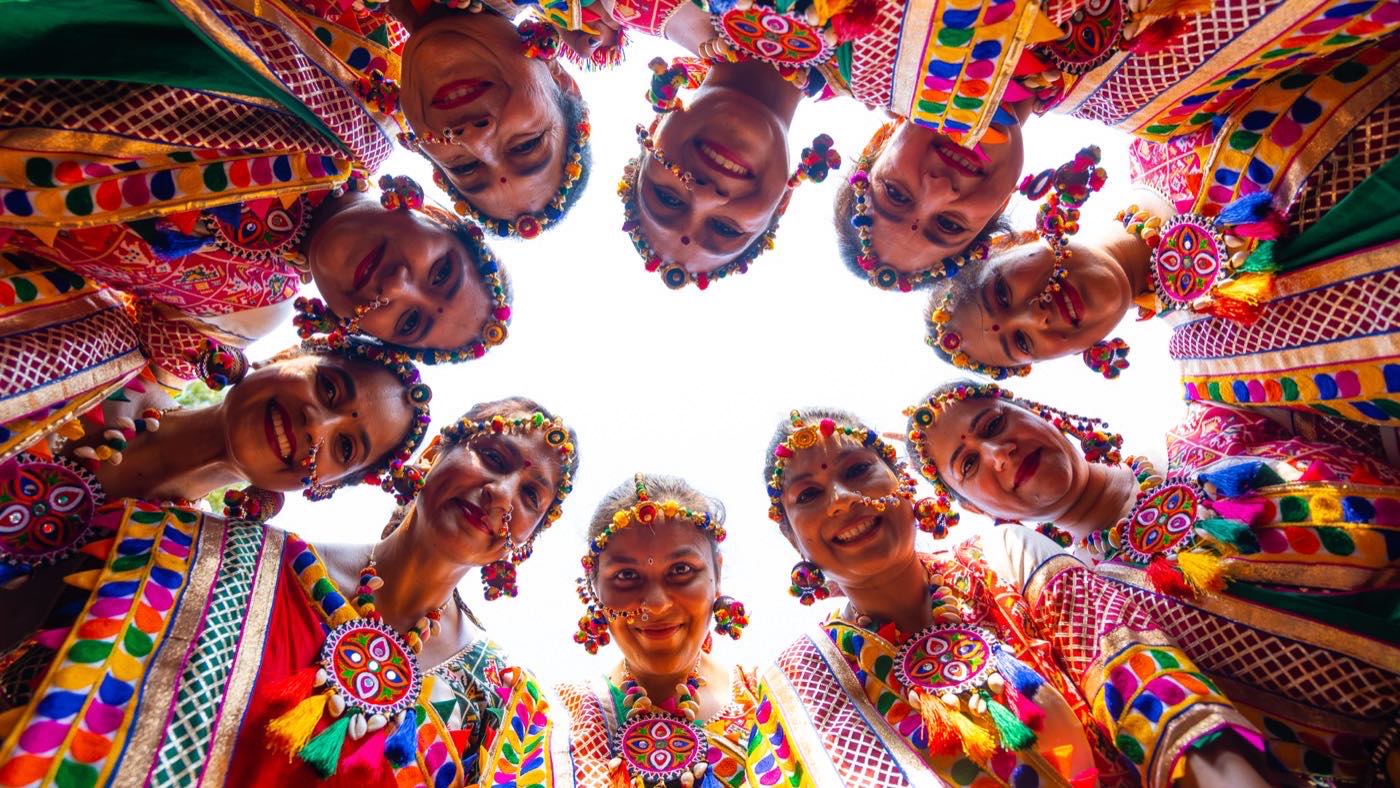
Garba Groove is a Bay Area garba community built on one idea: anyone can learn this dance, and nobody should learn it alone. Classes are open to every background, Gujarati or not. It exists because garba here shouldn't live only a few nights a year.
The 51 quiet weeks
Every October, the Bay Area lights up. 50+ garba nights run here each season: arena nights, community ras-garba, school gyms full of spinning circles. For a few nights, it feels like the whole community is home.
Then it goes quiet. The music stops, the chaniya cholis go back in the closet, and the thing that made a room full of strangers feel like family disappears for another year.
Garba Groove started in that silence. Not as a workshop you forget by Navratri, and not as a night you attend once and watch from the side, but as a class you belong to: a circle that meets, learns, sweats, and gets genuinely good together.
Garba Groove was started by Fenil, a Gujarati who's been dancing garba for ten years and believed the Bay Area deserved more than a few nights of it. The choreography traces back to Surat, Gujarat, with a Mumbai and Bollywood-influenced flavor woven in. More about the person teaching your classes.
What we're building
A circle, in the most literal sense. Garba is danced around a center, everyone facing in. Nobody's in the back row, nobody performs alone, and the person who walked in scared is absorbed into the same rotation as the person leading it. That's not a teaching gimmick; it's the whole tradition, and it happens to be one of the least embarrassing ways to learn a dance.
So the mission is simple: take the joy the Bay Area already feels every Navratri and give it a weekly home. Classes run in seasonal sessions today, and the waitlist is how they grow. When enough people in a city raise their hand, the classes keep coming after the season ends. Every signup is a vote.
Who this is for
Broader than you might think. The Bay Area is home to roughly 436,000 Indian Americans, and most of them aren't Gujarati; the community here speaks Hindi, Telugu, Tamil, Punjabi, and forty other languages. Garba belongs to all of it, and to anyone else who hears the dhol and can't stand still.
Source: U.S. Census Bureau, American Community Survey, 2018–2022 5-Year Estimates.
- Second-gen Indians who grew up circling a Navratri floor on borrowed steps and want to finally learn it for real, on their own terms. Zero cringe.
- Folks from every corner of India for whom garba was never home turf. No Garba background? Most of the room didn't have one either.
- Non-Indian dancers and the dance-curious. You don't have to be Indian. You have to like moving. All are welcome, said plainly.
- Anyone who has danced anything before. Bollywood team, college org, a salsa habit: you'll catch the choreography in a class or two and probably never sit out a Navratri again.
The Gujarati warmth is real, from the music to the "kem cho" at the door, but it's flavor, never a test you have to pass.
Come see for yourself
The story sounds nice on a page. It's better mid-spin, when the whole circle hits the step at once.