
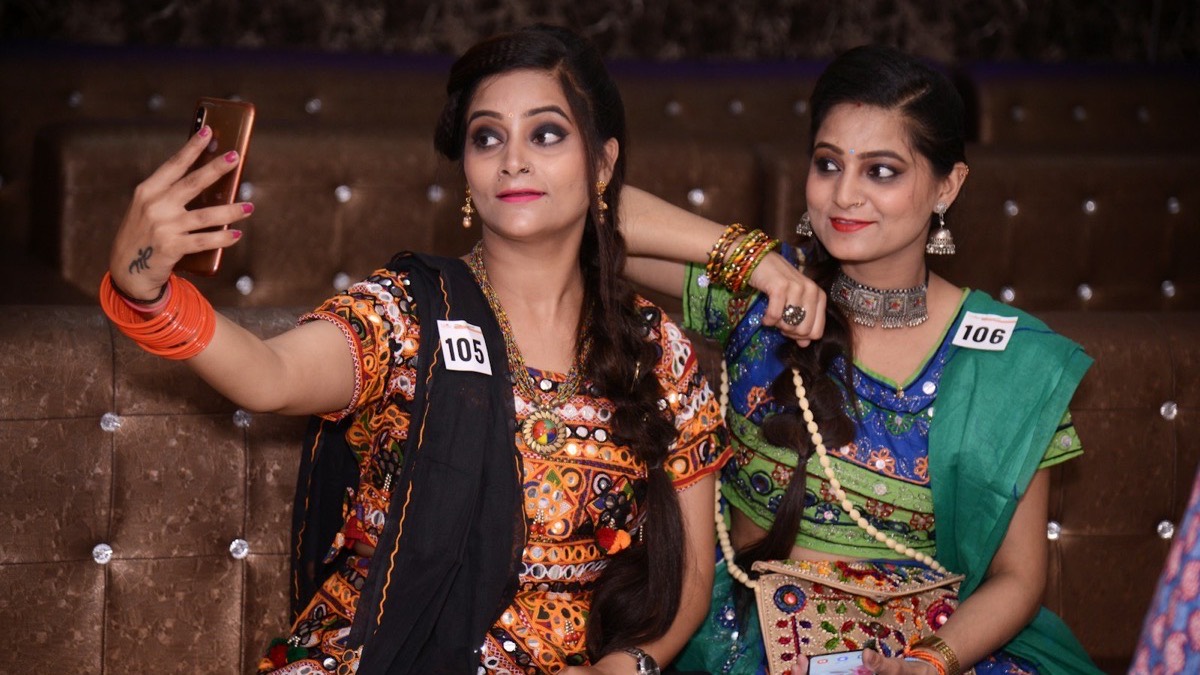
Your First Garba: A Guide for Non-Gujaratis
Not Gujarati? Not Indian? You're still invited. What to expect at your first garba, the etiquette that matters, and how the circle absorbs beginners.
Can non-Gujaratis really go to garba?
Yes, and here’s the part most first-timers don’t know: at a Bay Area garba, most of the room isn’t Gujarati either. American Community Survey data shows Gujarati speakers make up only about 6.6% of the Bay Area’s Indic-language speakers; the local Indian community is predominantly Hindi, Telugu, Tamil, and Punjabi speaking. Navratri here is a shared diaspora celebration, and increasingly a shared everyone celebration, with plenty of non-Indian dancers in the mix.
So the question “is this for me?” has a data-backed answer: the circle you’re worried about joining is already full of people who came to garba from outside the tradition. You won’t be the exception. You’ll be the norm.
If you want the background before you go, start with our pillar guide, what is garba. The one-paragraph version: garba is a Gujarati folk dance performed in a circle during Navratri, moving around a central lamp with rhythmic claps and spins.
What actually happens at a garba night?
A typical night has a shape:
- Garba first. The circle forms (at big events, several concentric circles) and rotates around the center. The music starts slow and gradually accelerates. Dancers drop in and out freely.
- Aarti. Partway through, the music pauses for a short prayer ritual. Dancing stops; people gather, and it resumes after.
- Dandiya raas. The stick dance. Partners face each other, strike sticks in rhythm, and rotate to new partners as the line moves. You don’t bring a partner; the format hands you one every few beats.
The whole thing runs on repetition. One step pattern per song, looped, which is exactly why the circle absorbs beginners: watch for half a song, step in, and the pattern carries you.
What’s the etiquette I should know?
Less than you fear, and none of it is secret:
- Join the outer circle first. Inner circles move faster and dance harder. Outer rings are where beginners belong, and nobody resents you being there.
- Match the direction of flow. Everyone moves the same way around the circle. Slot in, don’t swim upstream.
- Don’t cut across the circle mid-song. Walk around the outside instead.
- Pause for the aarti. It’s the devotional heart of the night. You’re welcome to observe respectfully or join; standing quietly is completely fine.
- Mistakes are invisible. The circle is moving; a missed step vanishes in a beat. Nobody is grading you.
That’s it. There’s no heritage quiz, no language test, no gate. Come with curiosity and you’ve met the dress code for belonging.
Do I need to understand the songs?
No. The songs are mostly in Gujarati, and the beat is the only instruction you need: the dhol tells you when to step and when to clap. Think of the lyrics as atmosphere and the rhythm as the teacher.
Classes work the same way. At Garba Groove, every step is named and broken down in plain language, and Gujarati stays what it should be for a newcomer: warmth in the room, never a barrier at the door.
How do I learn the steps before I go?
You have two options, and they stack.
Option one: just go. The circle genuinely does absorb beginners, especially at community nights. Wear something you can move in (here’s what to wear to garba if you don’t own Indian clothes), start in the outer ring, and copy the person ahead of you.
Option two: learn first, then go. A few classes turn a night of cautious shuffling into a night of actual dancing. Our classes assume zero experience and zero background; if you’re an adult worried you’ve missed the window, you haven’t, and this guide to learning garba as an adult explains why.
The fastest start: book your first class. You’ll walk into your first garba night already knowing the steps, and the circle will feel less like a spectacle and more like a place you fit.
Frequently asked questions
Is it okay to go to garba if I'm not Indian?
Yes. Bay Area garba nights and classes welcome everyone, and non-Indian dancers are a normal part of the scene. Showing up with curiosity and respect is the whole entry requirement.
Will people mind if I make mistakes?
No. Garba is danced in a moving circle where everyone is watching their own feet. Beginners joining mid-song is normal, and mistakes disappear into the motion within a beat or two.
What etiquette should I know at my first garba?
Start in the outer circle (inner rings are faster), move with the flow rather than against it, don't cut across the circle mid-song, and pause respectfully for the aarti. That's the whole list; there's no heritage quiz and no gate.
Where can I learn garba before going to an event?
Take a beginner class. Garba Groove teaches garba and dandiya in the Bay Area with no experience or Indian background needed.
Keep reading
What Is Garba? A Beginner's Guide
Garba is Gujarat's circle dance of Navratri, now danced worldwide. What it is, where it comes from, and how a total beginner can join a circle.
Read →Learning Garba as an Adult, No Experience Needed
Danced garba as a kid and rusty now? Never tried it at all? Here's how adults actually learn garba, how long it takes, and why nobody's judging.
Read →What to Wear to Garba Night
Chaniya choli, kediyu, kurta, or just clothes you can spin in: what people actually wear to garba nights and classes, plus the footwear question, answered.
Read →