
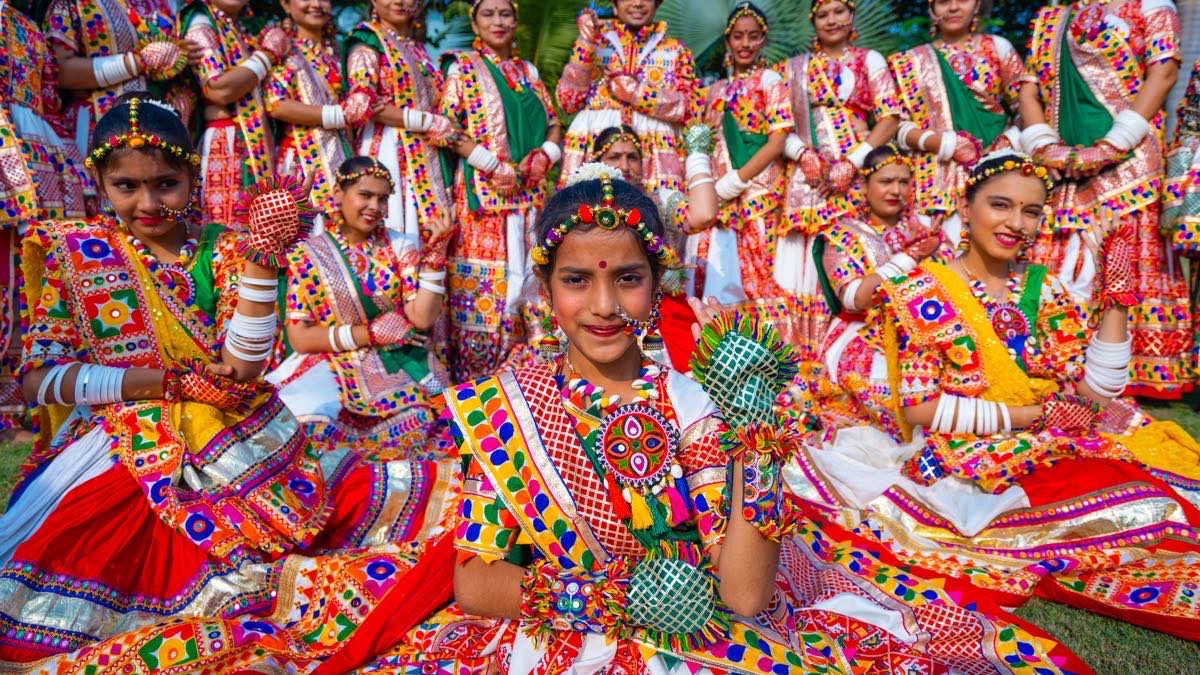
Learning Garba as an Adult, No Experience Needed
Danced garba as a kid and rusty now? Never tried it at all? Here's how adults actually learn garba, how long it takes, and why nobody's judging.
I danced garba as a kid. Will it come back?
If your garba education was a family Navratri, an aunt grabbing your wrist and pulling you into the circle, then yes, more of it survived than you think. The two-clap and three-clap patterns you absorbed as a kid live in muscle memory, and muscle memory is patient. What feels like “I’ve forgotten everything” is usually just rust on top of a real foundation.
The difference now is that a class rebuilds that foundation deliberately. As a kid you learned by copying whoever was next to you, half a beat behind, hoping nobody noticed. In a class, the steps get named, broken down, and drilled at a speed you control. The strangest part for most returners is discovering they’d been doing a step slightly wrong for twenty years, and that fixing it takes one evening.
So no, being rusty doesn’t mean starting over. It means starting warm.
Can I really learn garba with zero experience?
Yes, and you won’t be the only one. Garba is built from a small set of repeating steps danced in a loop, which makes it one of the most learnable social dances there is. You don’t memorize a routine; you learn a pattern, and then the pattern carries you. If you can walk in rhythm, you can learn garba. (New to the dance entirely? Start with what garba actually is.)
Our classes assume nothing, and they’re built as much for Hindi, Telugu, or Tamil speakers who never grew up with garba as a regional tradition as for anyone who isn’t Indian at all. If that’s you, our guide for first-timers from any background covers what to expect. The welcome is the same either way: no experience needed, said out loud.
What if I’m the worst one in the room?
Here’s the thing about a circle: everyone faces in, everyone’s doing the same step, and nobody learns alone. There’s no front row to hide behind and no back row to be exiled to, which sounds scary until you experience it and realize it’s the opposite. A wobble in a moving circle is invisible. Everyone around you is watching their own feet.
The fear of being bad and embarrassed is the single biggest reason adults never start, and it’s also the emptiest one. Every person in the circle stood exactly where you’re standing. That’s why we say start with a single class, so the fear has nothing to hold onto. You risk one evening and find out.
How long does it take to learn garba?
Honest answer: you’ll be moving with the circle in your first class, comfortable within a handful, and genuinely good with a season of practice.
If you’ve danced anything before, Bollywood, hip-hop, classical, a college team, even a Zumba habit, expect the fast track; prior dancers usually pick up the choreography within a class or two. Complete beginners just take a slightly longer ramp to the same place.
That arc is exactly why classes are booked one at a time: come as often as the season calls for, rather than one drop-in and a hope. Learning garba is a journey with a visible finish line, and the finish line is you, at Navratri, in the middle of the floor instead of at the edge of it.
What does an adult garba class actually look like?
A typical session: a warm-up, then one or two steps broken down slowly, then the steps stitched into a garba as the music gradually speeds up. By the end you’re dancing full patterns to real songs, and, fair warning, you will be sweating. Garba is continuous, full-body movement, and the workout sneaks up on you. But that’s the discovery, not the point. The point is the moment the circle locks into rhythm and you’re inside it.
Want a head start? Walk through the basic garba steps before your first session.
What’s the first step?
Book a class. Come rusty, come brand new, come convinced you have two left feet. Book your first class; the circle has room.
Frequently asked questions
Am I too old to learn garba?
No. Garba is danced at every age, from kids to grandparents, and classes scale to your pace. The steps are repeating patterns, not choreography you have to memorize under pressure.
Do I need a partner to learn garba?
No. Garba is a circle dance, so you dance with the whole room rather than one person. Dandiya raas uses partners, but partners rotate constantly, so coming alone is completely normal.
Do I need to be Gujarati or speak Gujarati to join a class?
No. Garba Groove classes are open to everyone: second-generation Indians, Hindi or Telugu or Tamil speakers, and people with no Indian background at all. Nobody checks your heritage at the door.
How many classes do I need before Navratri?
Most people are comfortable with the core steps after a handful of classes. With nothing to commit to up front, starting in August or September leaves plenty of runway before the festival in October.
Will the steps come back if I danced garba as a kid?
Faster than you expect. The clap patterns you absorbed at family Navratris live in muscle memory; a class names the steps, cleans up the details, and the rhythm usually returns within an evening or two. You're not starting over, you're starting warm.
Keep reading
Basic Garba Steps for Beginners
Learn the foundational garba steps from zero: the two-clap (be taali), the three-clap (teen taali), and simple spins, plus how to practice at home.
Read →Your First Garba: A Guide for Non-Gujaratis
Not Gujarati? Not Indian? You're still invited. What to expect at your first garba, the etiquette that matters, and how the circle absorbs beginners.
Read →What Is Garba? A Beginner's Guide
Garba is Gujarat's circle dance of Navratri, now danced worldwide. What it is, where it comes from, and how a total beginner can join a circle.
Read →